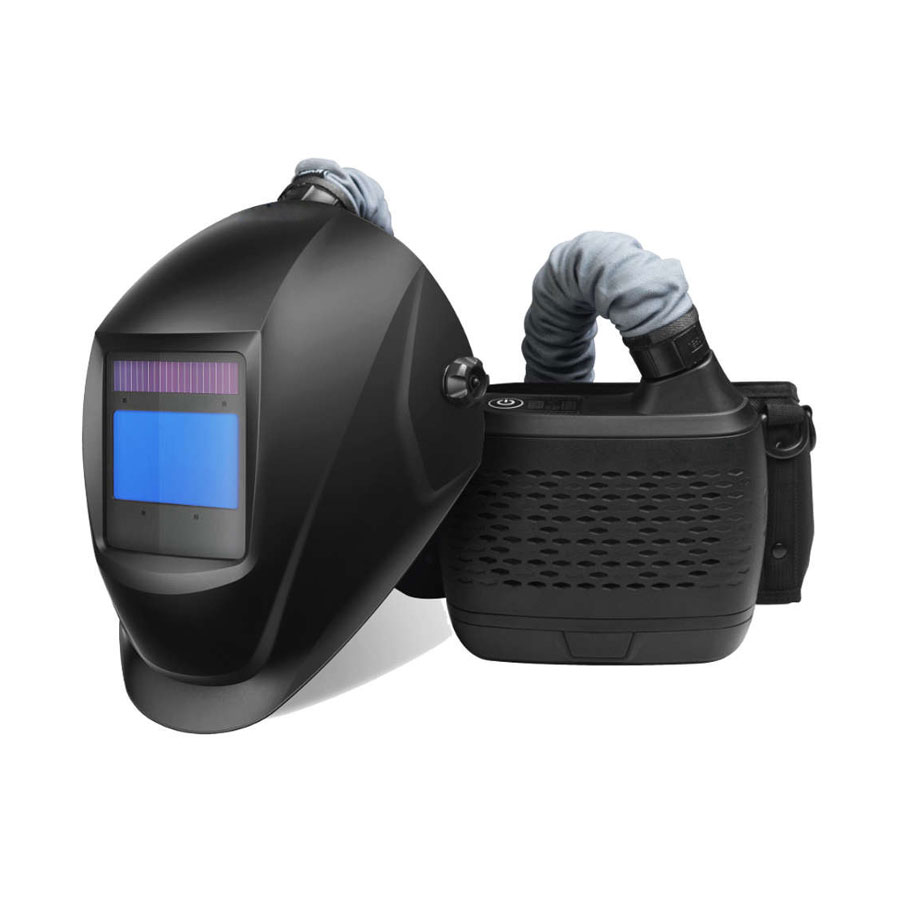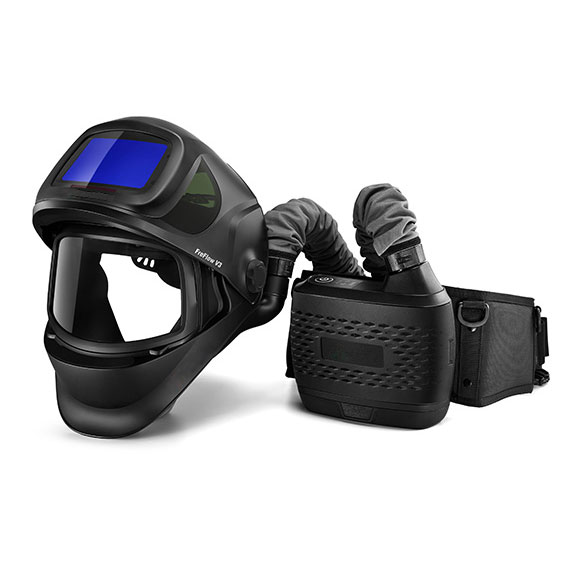
PAPR Powered Air Purifying Respirator
Miller
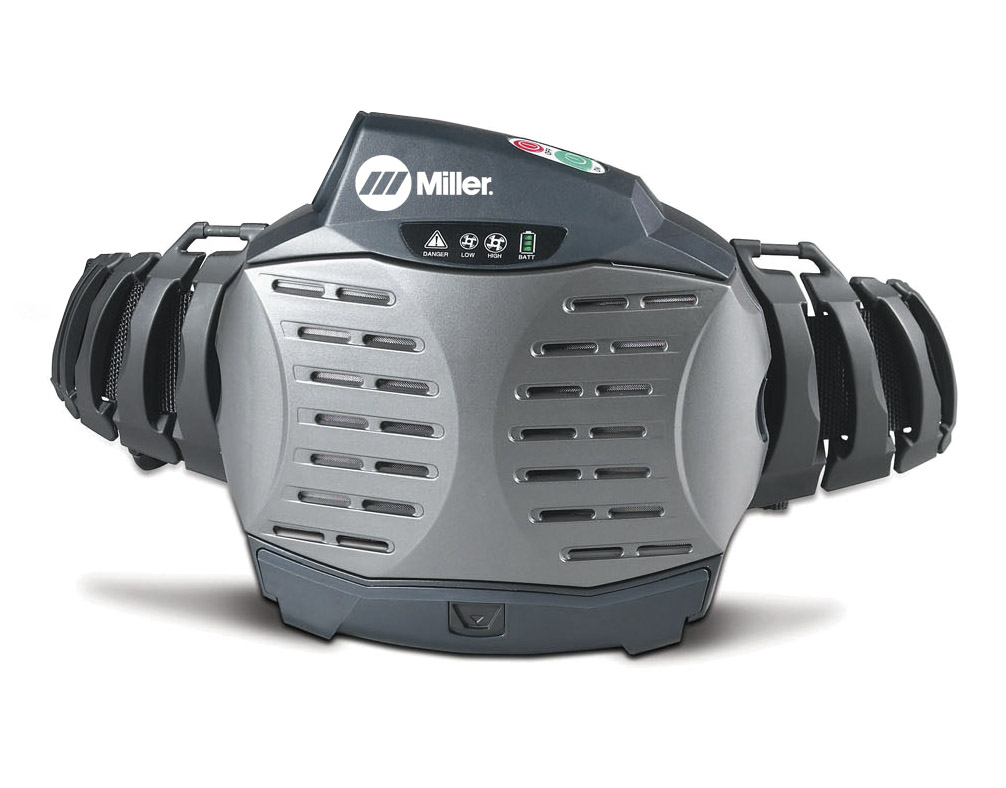
PAPR Powered Air Purifying Respirator
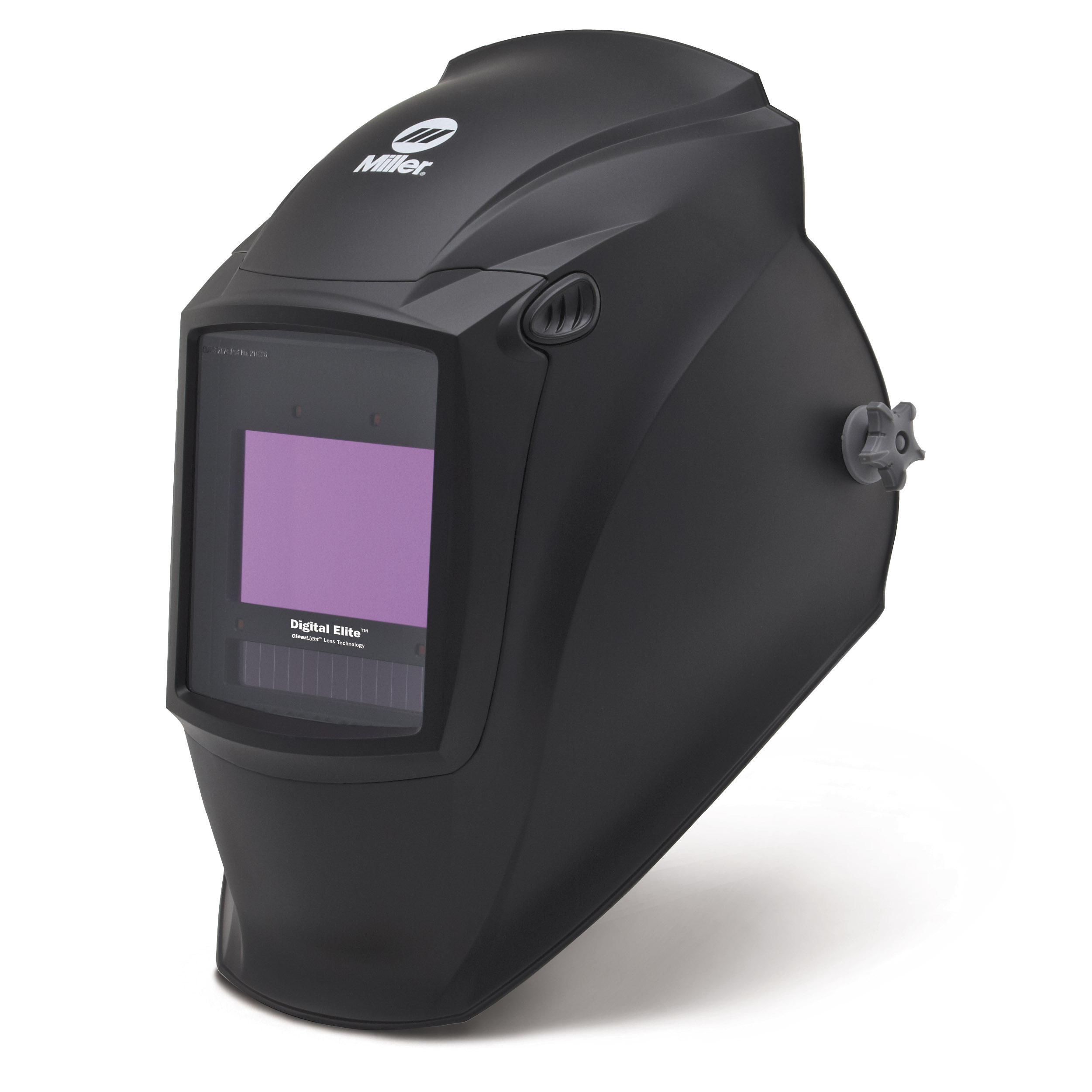
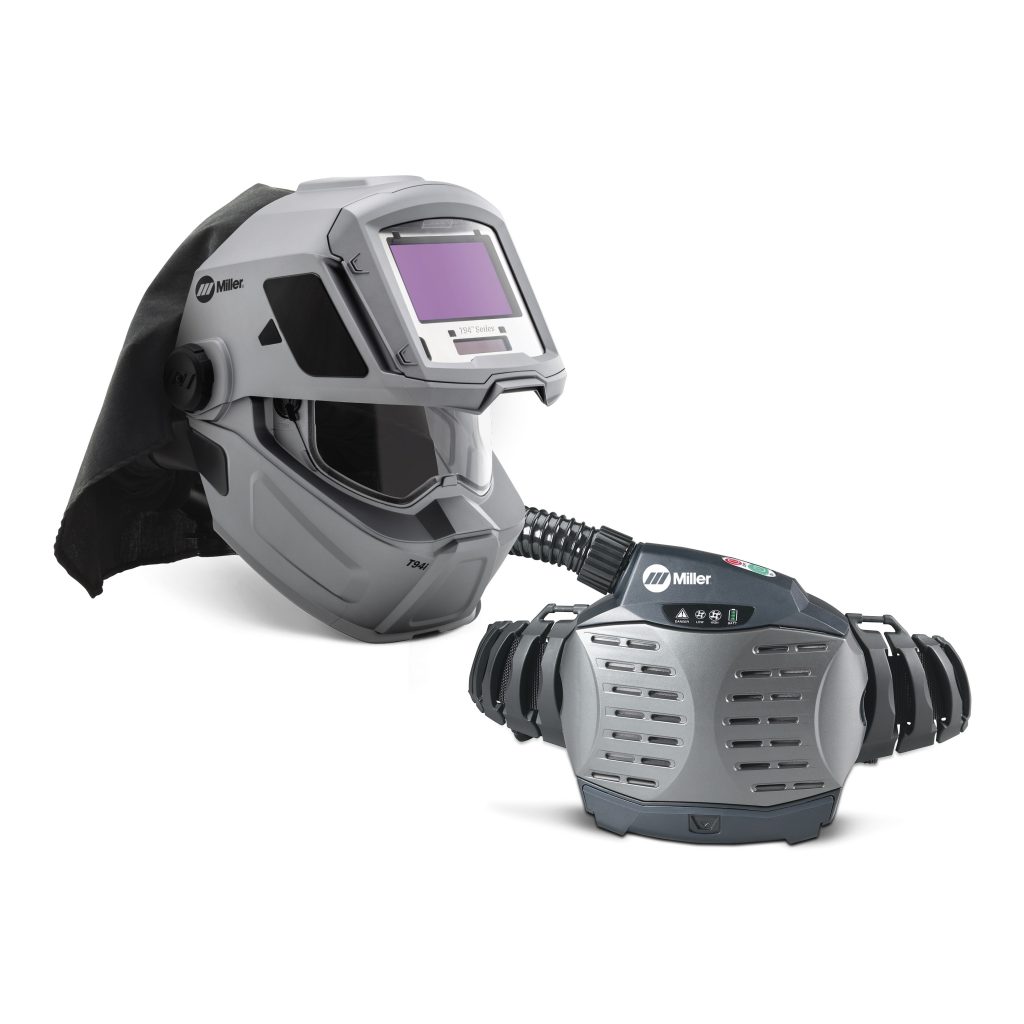
PAPR Welding Helmet
Lightweight, well-balanced design reduces neck torque, minimizing operator fatigue and strain leading to an increase in short-term comfort as well as long-term health benefits.
4% LIGHTER for reduced fatigue.
17% LESS TORQUE for reduced neck strain.
Ergonomic, four-point flexible headgear design provides a secure fit, while avoiding major pressure points within the head, maximizing all-day wear. Customizable fit with seamless tilt, distance and tightness adjustments.
ClearLight™ lens technology optimizes contrast and clarity in welding and light states — reducing eye strain and operator fatigue.
Four lens operating modes provide versatility for various welding, cutting and grinding applications. • X-Mode™ senses the arc’s electromagnetic field rather than brightness to darken the lens — ideal for outdoor, low-amp TIG and obstructed view applications • Half-shade settings for precise lens adjustment • Infotrack™ 2.0 allows for monitoring of arc time and arc count • Simplistic digital lens interface allows for easy adjustment with or without gloves.
Shade 5.0 side windows enhance peripheral vision, amplifying sense of surroundings.
Chiseled shell design provides optimal skin coverage while easily accommo dating a Miller® half mask respirator.
Matte silver finish reflects ambient heat, reducing temperatures up to 4 degrees Celsius underneath the helmet.
Quick-release front cover lens simplifies lens changes, reducing downtime.
Helmet locks in upright position, allowing user to keep helmet on for non-welding tasks.
Meets ANSI Z87.1+, CSA and CE standards.
Pivoting, oversized back pad and multiple head straps secure helmet in downward applications, eliminating overtightening and discomfort.
ClearLight™ lens technology provides a brighter light state and crisp view while welding, enhancing visibility and reducing eye strain.
External grind control (T94) allows for seamless transitions from welding to grinding.
Industry’s largest integrated grind shield (T94i) provides 284 sq. cm of clear viewing area for grinding and other tasks, increasing helmet-on time, decreasing the potential for eye injuries.
- Heavy industry
- Metal processing
- Automotive and automotive parts industry
- Shipbuilding
- Aviation
- Construction and infrastructure
- Chemicals and petrochemicals
Viewing Area 58 sq. cm (9 sq. in.) Operating Modes Weld (8–13), Cut (5–8), Grind (3), X-Mode™ (8–13) Sensors 4 TIG Rating ≥3 amps Switching Speed 1/20,000 second
- MMA
- TIG (DC)
- TIG (AC/DC)
- MIG/MAG
- MIG/MAG Pulse
- Pulse TIG
- Plasma Arc
- Plasma Cut
- Carbon Cutting
- Grinding
- Oxy-acetylene Welding
- Oxygen Cut
Catalogs : PAPR Powered Air Purifying Respirator Catalog-1,
User Guides :
Related Products