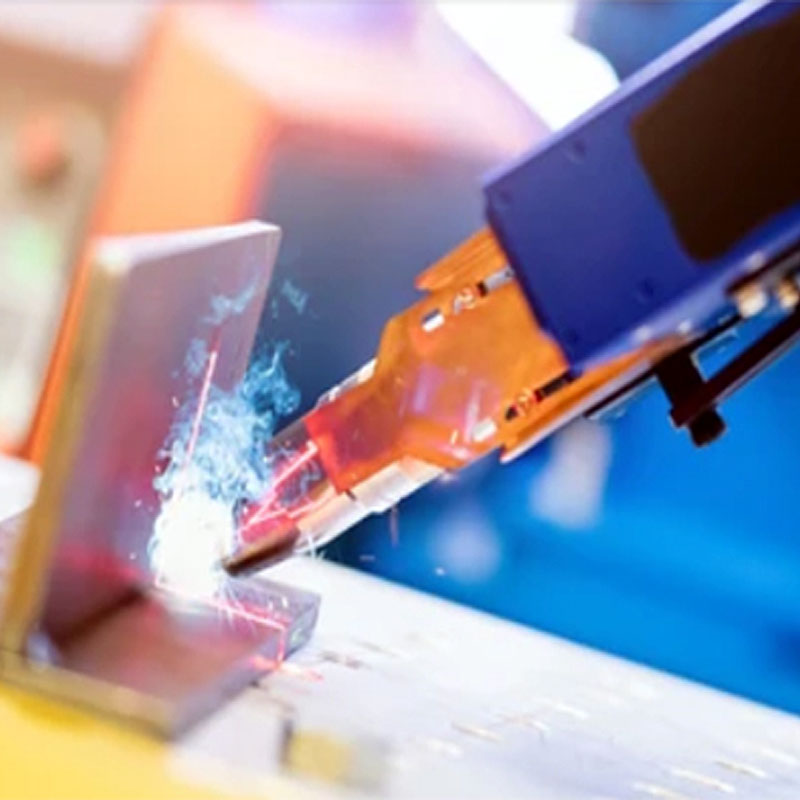
WeldBOX-M
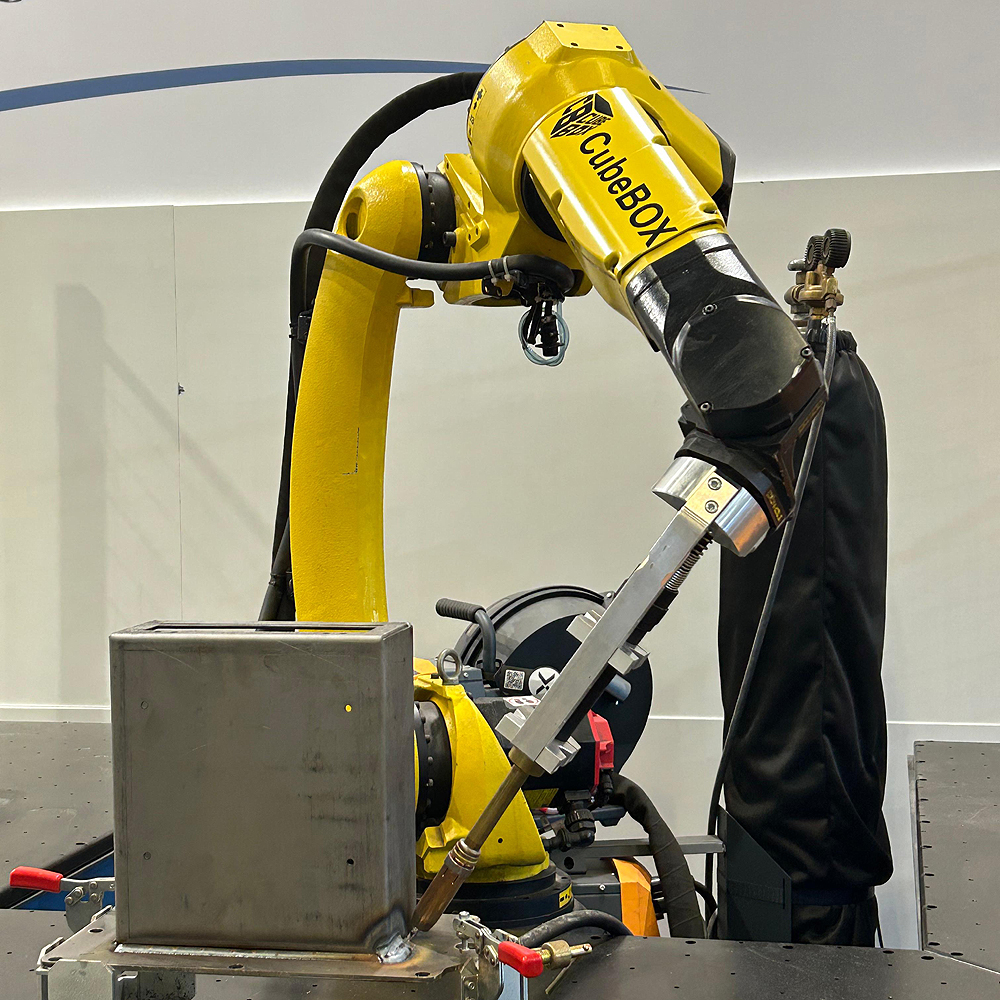
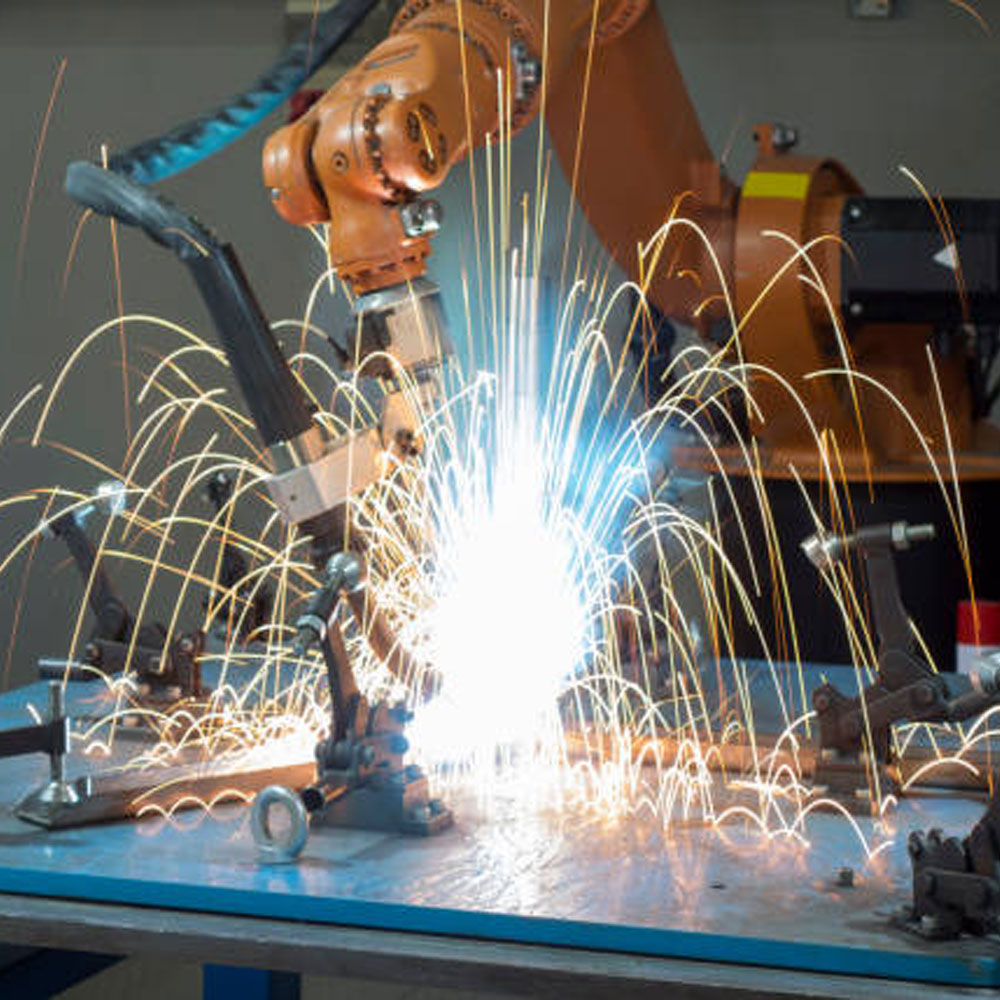
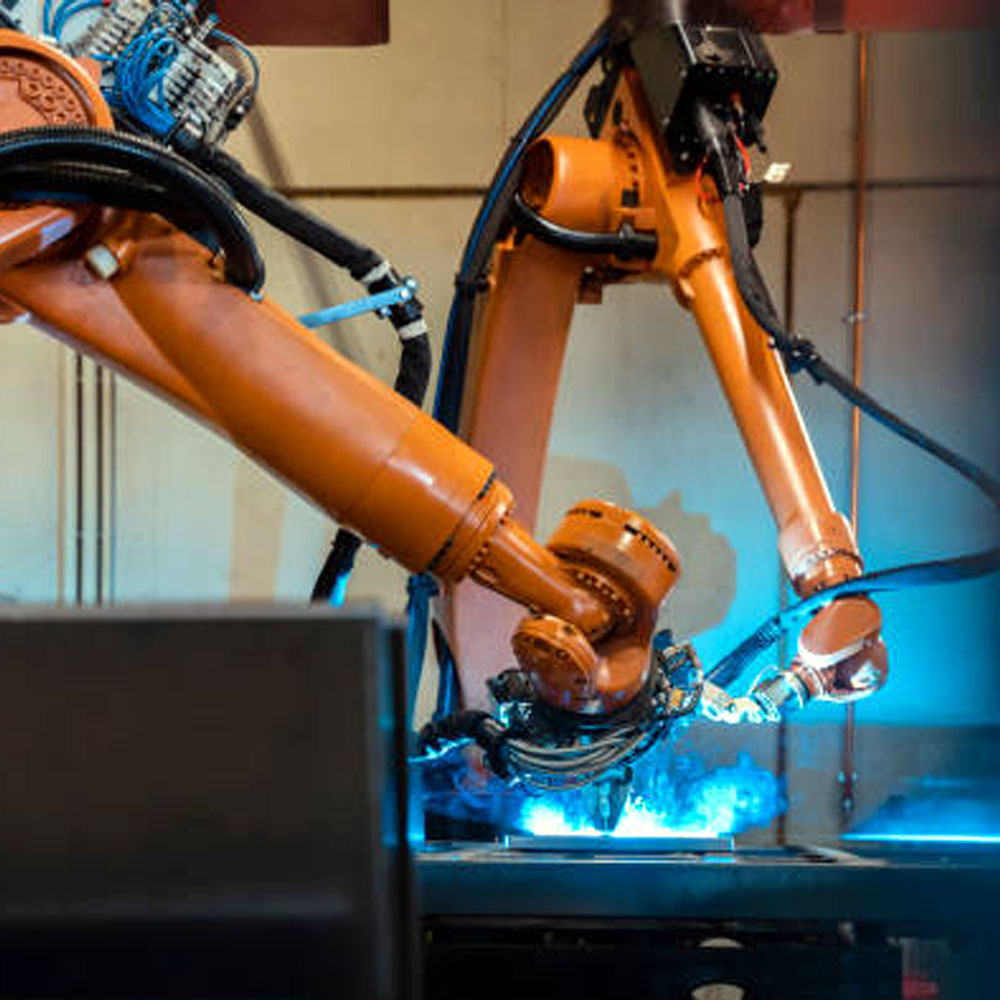
WeldBOX
WeldBOX-M
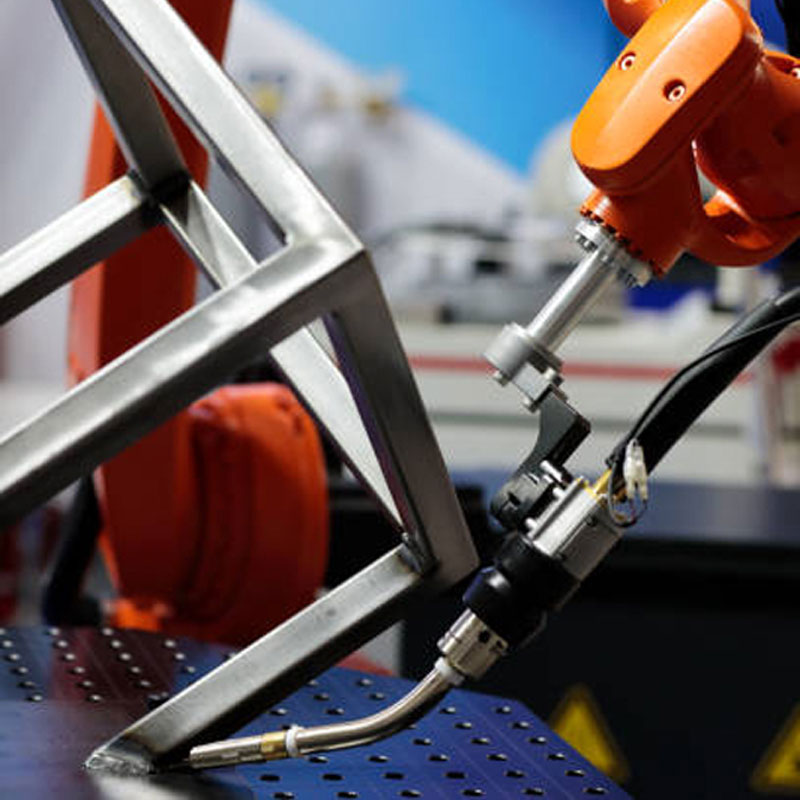
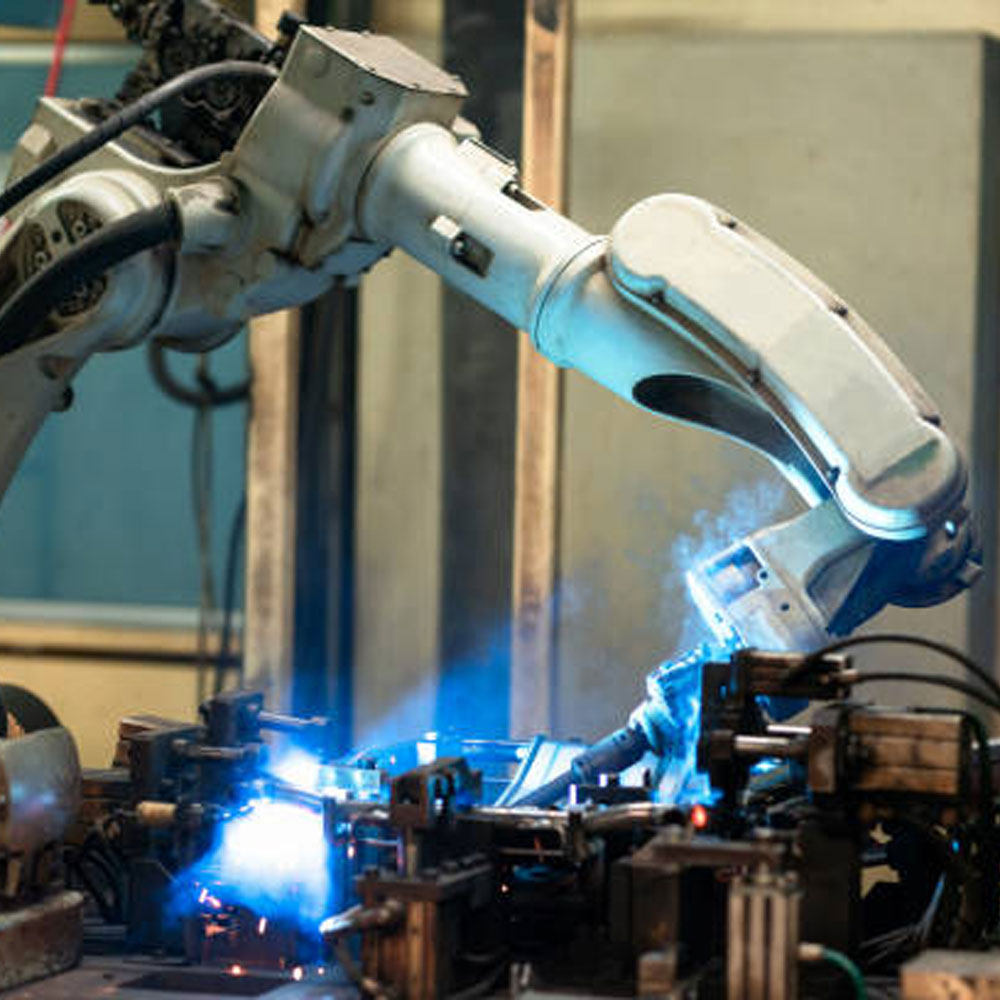
Robotic Arc Welding Systems
- These are automatic welding machines designed for high productivity. These systems are typically combined with peripheral devices such as robots, auxiliary motors, and positioners.
- Capable of MIG, TIG, plasma, and laser welding, they offer advantages such as vibration-free operation and flexible maneuverability in confined spaces.
Working:
- Programming: The robot is pre-programmed to perform a specific welding process. This programming includes setting the weld points, welding speed, current, and voltage.
- Positioning: The robot ensures proper positioning for the welding process. Because they typically have a multi-axis design, they can easily move to different angles and positions.
- Welding Electrode and Gas Flow: The WeldBOX-M arc welding robot creates an arc using a welding electrode and a shielding gas (usually argon or carbon dioxide). The electrode melts and fuses the material.
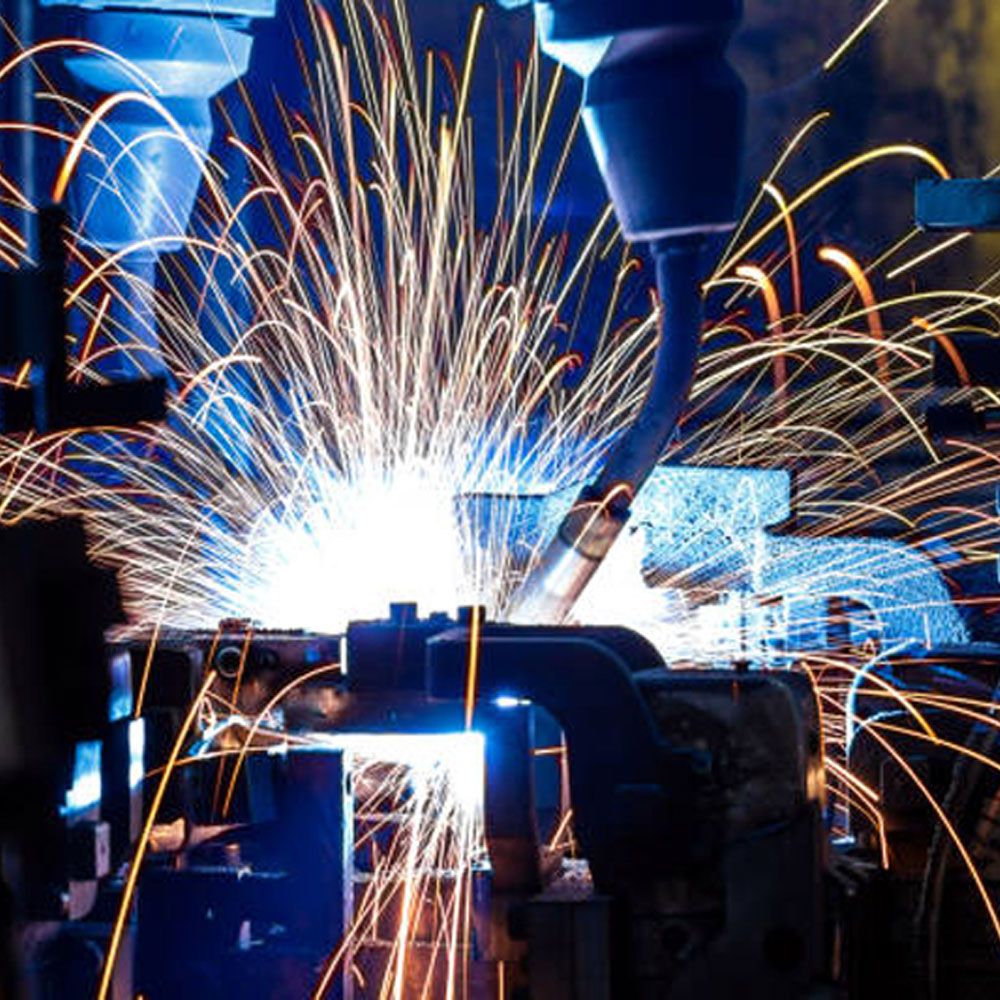
- Arc Formation: The robot activates the welding current and creates an electric arc between the electrode and the workpiece, allowing the metal to melt and fuse.
- Progress: The robot's speed and motion algorithms during the welding process are optimized for high-performance weld quality.
- Observation and Control: It is equipped with sensors or cameras that monitor weld quality to detect and correct errors.
- Completion and Adjustment: After the welding process is completed, the robot terminates the process and makes any necessary adjustments (cooling time, rechecking, etc.).
Advantages:
- High Efficiency: It accelerates the production process by working continuously and quickly.
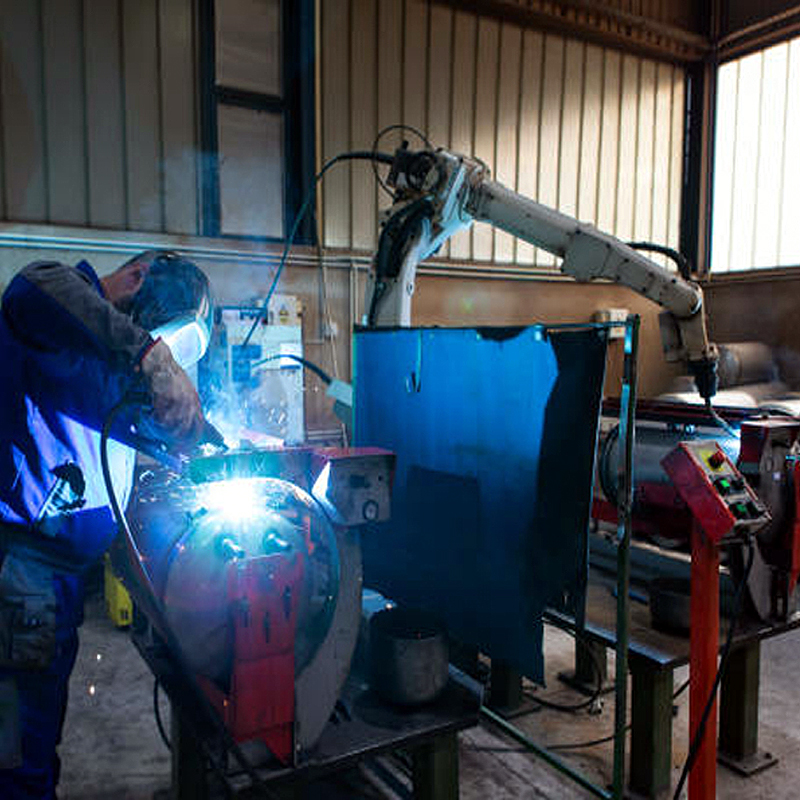
- Labor Savings: It relieves people of repetitive workloads, allowing the workforce to focus on more creative and strategic tasks.
- High Quality and Consistency: It helps produce high-quality and consistent products by minimizing the margin of error in production processes.
- Flexibility: It has the ability to adapt to different welding techniques and materials. Thanks to their programmability, they can be quickly reconfigured for new workpieces.
- Low Waste and Cost: Material waste is minimized through more precise welding processes, which in turn reduces costs.
- Monitoring and Control: It enables data collection and analysis through integrated monitoring and control systems, allowing for process optimization.
- Safety: It increases worker safety and helps prevent accidents. Reduced Physical
- Fatigue: It reduces physical fatigue for employees in the workplace.
- Automotive: In the production of vehicle chassis, body parts, and other components.
- Construction and Agricultural Equipment: In the welding of large metal structures, machinery, and agricultural equipment.
- Energy Sector: In projects such as wind turbines, power plants, and pipelines.
- Metalworking and Manufacturing: In the production and assembly of various metal parts in metalworking facilities.
- Shipbuilding: In construction and repair operations in shipyards.
- Aerospace: In the production stages of applications requiring high precision, such as aircraft and spacecraft.
- Iron and Steel Industry: In the welding of structural components of storage and transportation systems.
- Medical: Precision welding processes used in the production of medical devices.
- MIG/MAG (Gas Metal Arc)
- TIG (Argon)
- Plasma Cutting